
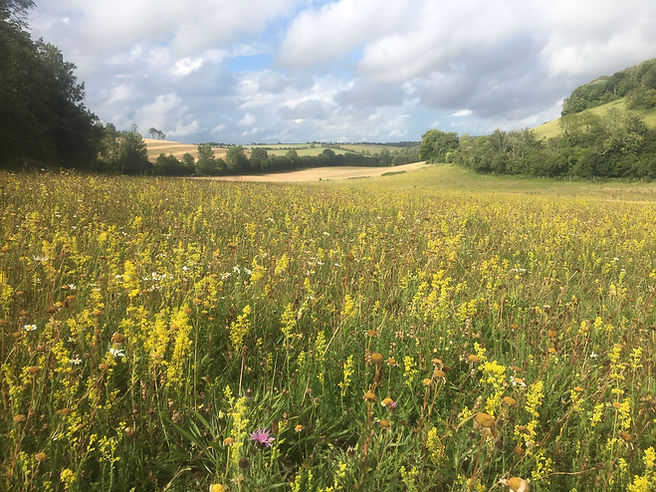
Nature Recovery in action
Running for over 25 years, nature recovery is already well underway with a range of species reaping the rewards of long term habitat restoration. With an ever-growing network of new wildflower grasslands being created each year, the range of vegetation structures, diversity of wildflowers and abundance of larval foodplants is restoring the vital insect-rich landscapes and the food webs upon which our wildlife depend. Combine this with wildlife friendly margins, in-field seed and nectar plots, regenerative farming practices, hedgerow planting and woodland management extends the benefits into all corners of the farms.

Glowworm
Glowworms occur in various areas across the project area. Typically found in 'old-growth' chalk grasslands and where relics of downland occur in roadside verges, we are also finding it some of the created wildflower grasslands

Lapwing
The Stour valley area is now becoming an important inland breeding area for lapwing where the network of wet grasslands, scrapes and bare fallow arable areas is regularly supporting 12 - 15 breeding pairs each year.

Barn owl
A healthy population of barn owl are present across the east kent downs landscape. Wildflower grassland creation is boosting the population of small mammals, a key part of the diet of this owl. Other owl species such as long eared and short eared owl are also now being sighted across some of the project area.

Hornet robberfly
With livestock grazing being an important management tool for managing grasslands, a healthy population of dung beetles is present across the landscape. This in turn is benefitting species such as hornet robberfly which prey on the large beetles such as dung beetles. The larvae of hornet robberfly also prey on dung beetle larvae.

Adder
Adder are one of the many species benefitting from the resource of wildflower grassland habitat being created across the landscape. Creating a large resource of wildlife rich grasslands enables some to be managed for a rougher and 'scrubbier' look, so creating new habitat for species such as adder

Large Scabious mining bee
As the network of wildflower grassland areas continues to expand every year habitat specialists such as Large Scabious Mining bee are now being found in a number of the grasslands. Previously only recorded on a handful of sites in east kent, in 2023 and 2024 we found the bee in 4 new locations, all wildflower grassland creation areas where its host plant, Large scabious, has developed good populations.

Small blue
A new colonist to the Barham Downs project area, the butterfly is thriving on large expanses of kidney vetch and is now colonising new grassland sites within the project area

Dingy skipper
One of our indicator species, the dingy skipper has colonised many of the new wildflower grasslands providing a good measure of plant diversity and vegetation structure

Yellowhammer
One of the many farmland birds responding well to insect-rich grasslands and the coverage of wildbird seed plots

Brown banded carder bee
Brown banded carder is one of the new colonists to the Barham Downs project area, benefitting from the large expanses of wildflower-rich grasslands

Duke of Burgundy
Duke of Burgundy is colonising new sites and benefitting from a landscape of new wildflower grasslands. Monitored annually, the species has enjoyed an upward trend in the total peak counts over the last 15 years. In 2022 the species witnessed a 3 fold increase with a total peak count of 534 butterflies across 13 sites and since then has enjoyed comparable numbers . In 2024 the total peak count was 526 and with another new wildflower grassland creation site showing signs of supporting a new colony.

Black veined moth
One of the rarest species in the project area, the moth is benefitting from a large resource of wildflower grasslands within the landscape and has established new colonies. There are now more colonies than at any time over the last 32 years of monitoring

Man orchid
A species which is colonising new grasslands and benefitting from the mid-successional sward structure that is present across many of the Stour valley new grassland creation sites

Serotine bat
One of the many species thriving on the new generation of insect-rich grasslands. A joint project with Kent Bat Group is showing the species in good numbers across the east kent valleys area with new colonies being discovered across the wider area